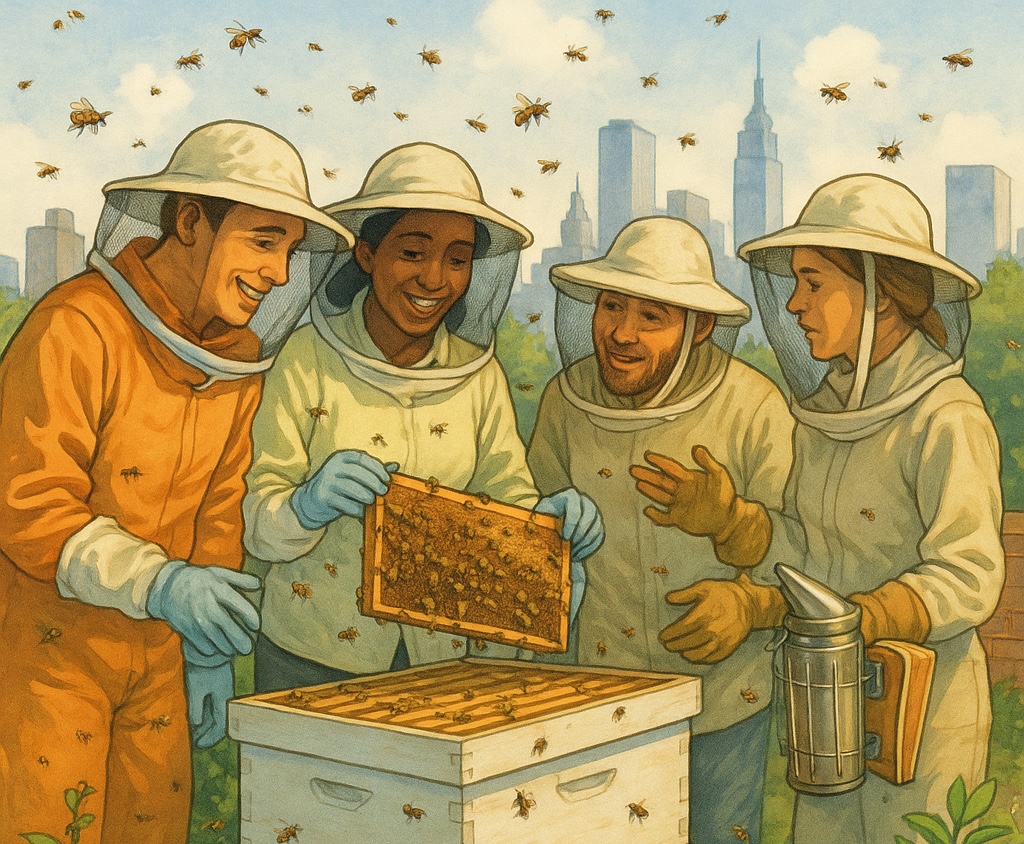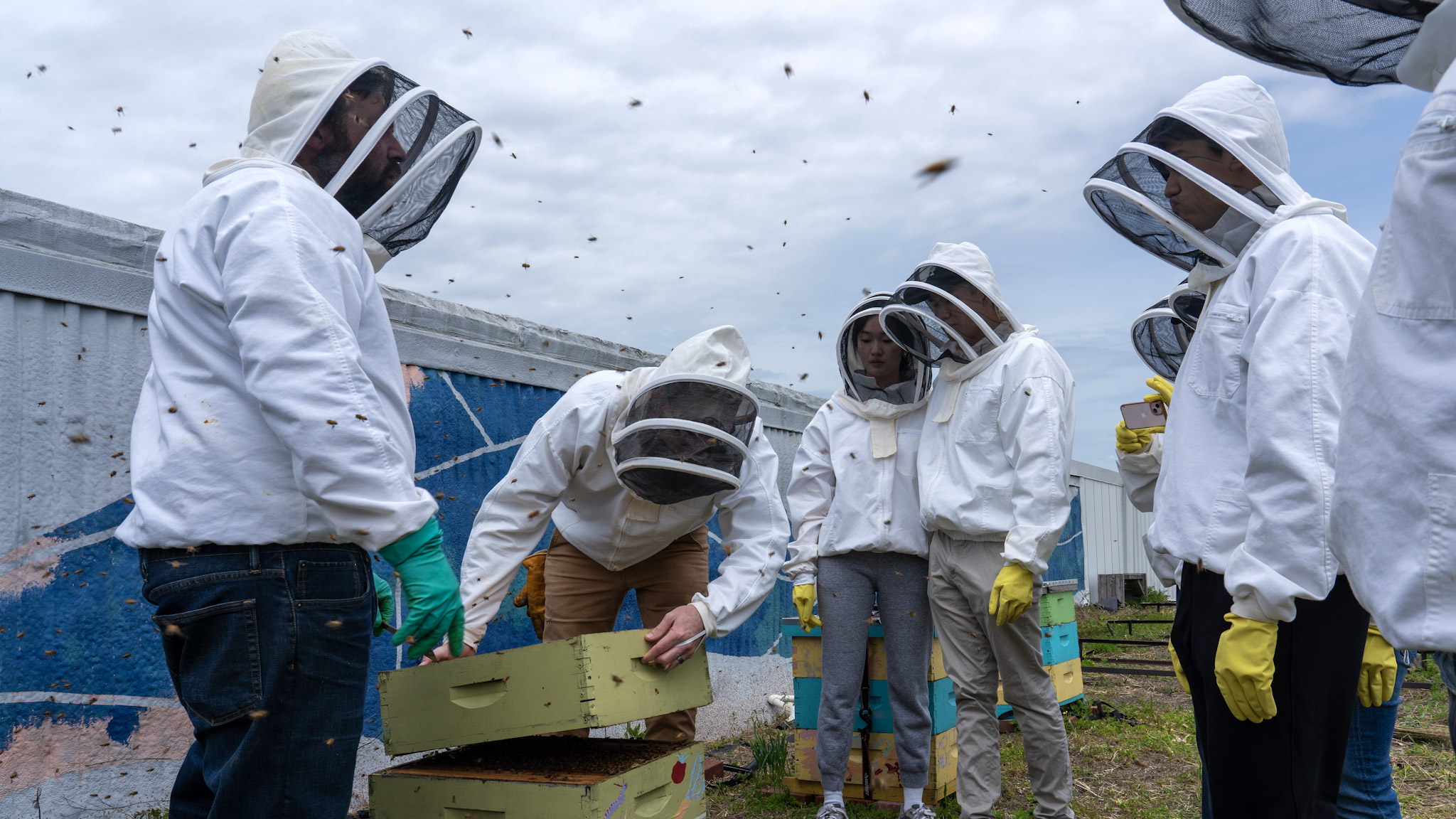
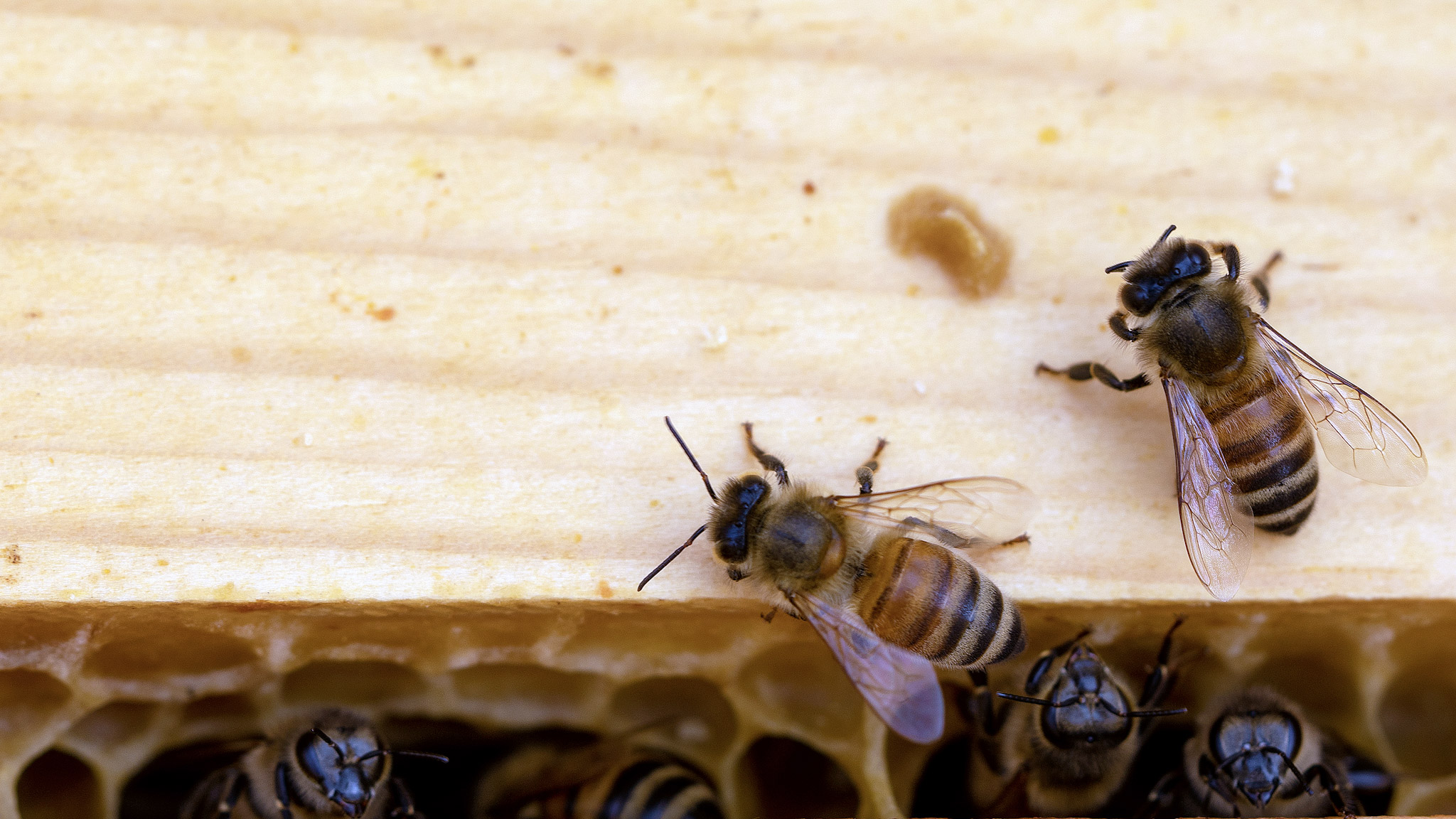
Urban beekeeping, especially in bustling cities like New York, offers incredible opportunities and unique challenges. Limited space, close neighbors, and city-specific environmental factors mean urban beekeepers must follow best practices to ensure their bees thrive and maintain good relationships within their community.
Whether your bees reside on rooftops, balconies, or community gardens, this guide outlines essential urban beekeeping best practices.
1. Strategic Hive Placement
Proper hive placement is vital for keeping bees happy and neighbors comfortable. Key factors include:
- Visibility & Discretion: Choose discreet locations to avoid unnecessary disturbances or concerns from passersby.
- Flight Paths: Position hives so entrances face away from high-traffic areas. Barriers like fences or shrubs can encourage bees to fly upward.
- Sunlight & Shelter: Morning sunlight helps bees start early, while afternoon shade prevents overheating. Rooftop hives may need additional consideration for shade and should be securly tied down to avoid pieces or whole hives being blown off of the building by wind.
- Accessibility: Ensure ample space around the hive for safe and effective hive inspections, as well as to and from the hive. Any structure holding a hive should be able to safely carry the weight of the hive and any people needed to move the hive. Consider this when choosing structures that may not be rated to carry high loads.
2. Effective Swarm Prevention and Management
Swarming is natural but can cause alarm in urban areas. Follow these best practices:
- Regular Inspections: Check frequently for swarm signs such as crowded conditions and queen cells, especially in spring and early summer. During the active season, inspecting every 10-14 days should give you a chance to observe early swarm preparation.
- Adequate Hive Space: Provide sufficient hive space by adding supers or splitting colonies proactively.
- Routine Requeening: Replace aging queens every 1-2 years to reduce swarming likelihood.
- Swarm Response Plan: Prepare a swarm retrieval plan and know local contacts for swarm relocation assistance. If possible, put swarm traps out to try to catch any swarming colonies.
3. Maintaining Bee Health in Urban Settings
Urban environments expose bees to unique stressors, from pollution to irregular forage to high hive density. Support colony health with these strategies:
- Regular Pest & Disease Monitoring: Routine checks for varroa mites, American Foulbrood, Nosema, and other pests or diseases are essential.
- Reliable Water Source: Provide easily accessible water sources, like shallow dishes with pebbles or corks, to help bees stay hydrated and manage hive temperature.
- Support Forage Availability: Plant pollinator-friendly flowers and collaborate with neighbors to boost forage consistency. Many city parks and green spaces have organizations that care for them. Volunteer and encourage them to plant for the pollinators.
- Avoiding Harmful Chemicals: Stay informed about local landscaping or mosquito spraying practices. Communicate proactively with neighbors and authorities to minimize pesticide exposure.
4. Being a Good Urban Neighbor
Successful urban beekeeping requires strong community relationships. Foster neighborly goodwill by:
- Open Communication: While you don’t have to advertise it, inform neighbors about your beekeeping activities and address any concerns proactively. Education can significantly reduce fears and misconceptions.
- Gentle Colony Management: If your hive becomes aggressive, requeen with gentler genetics to avoid conflict.
- Responsible Honey Harvesting: Ensure colonies retain sufficient honey stores for winter survival before harvesting.
- Adhering to Local Regulations: NYC beekeepers must register hives with the Department of Health and the NYS Department of Agriculture and Markets. Compliance protects and legitimizes urban beekeeping.
5. Continuous Learning and Community Engagement
Urban beekeeping is always evolving. Stay connected with your local beekeeping community for ongoing education and support.
- Networking: Join local clubs like the New York Bee Club to share experiences, resources, and best practices.
- Education: Regularly participate in workshops or meetings to remain updated on urban beekeeping advancements. Many colleges and universities, like Cornell University, offer online classes and other resources to beekeepers of all levels.
Thrive as an Urban Beekeeper
By implementing these best practices, you can maintain healthy colonies, support urban biodiversity, and build positive relationships within your community.
Want to connect, learn, and grow with fellow urban beekeepers? Join the New York Bee Club today! Sign up here to attend our next meeting and become part of NYC’s vibrant beekeeping community.